
Q1 FY26
Letter to Investors — July 2025
July 3, 2025
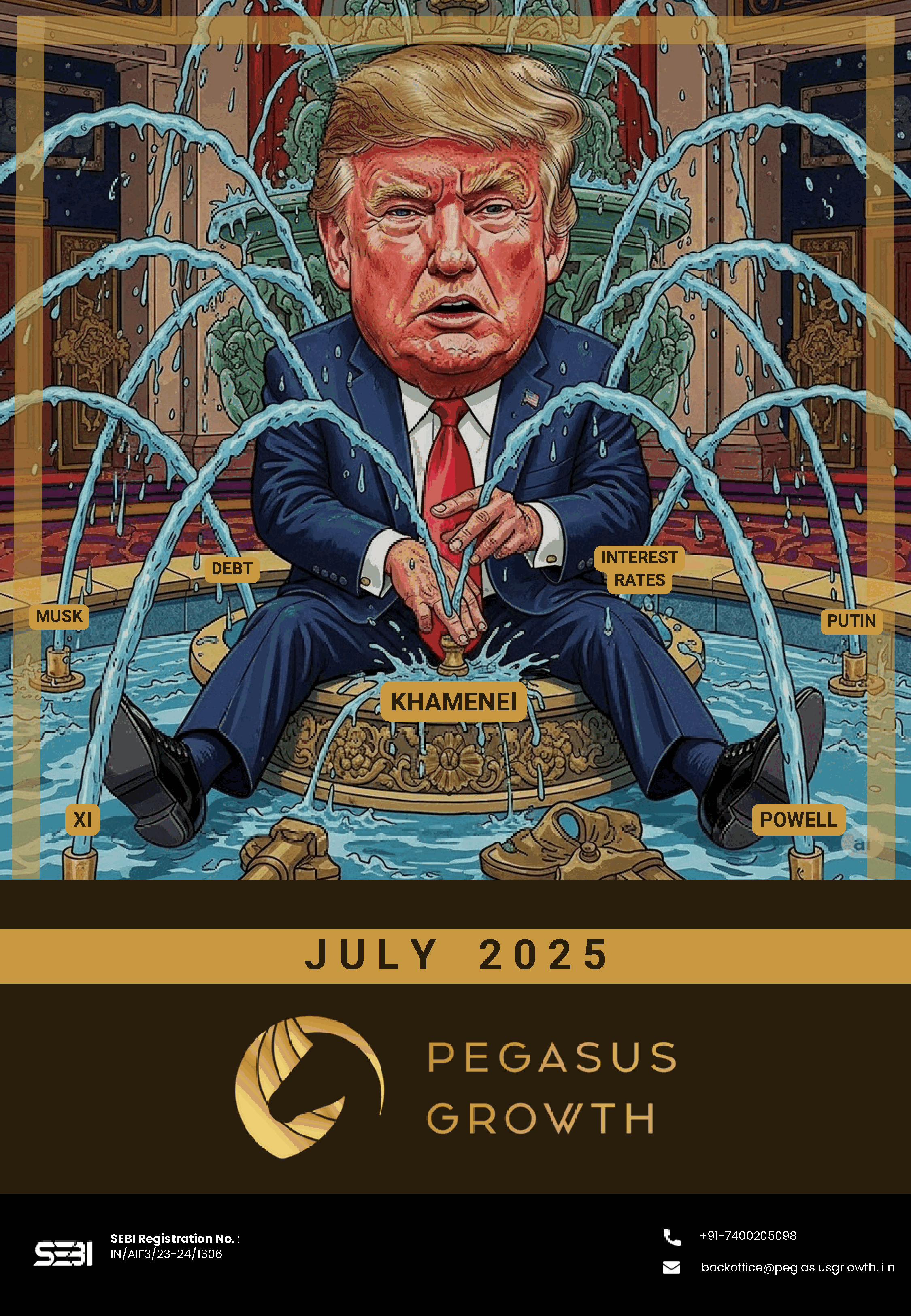
“When the old world is dying and the new world struggles to be born: Now is the time for monsters.”
Dear Investors,
It’s not often that an asset manager makes a significant allocation to cash. In the last 15 years, I’ve made that call just three times. At Pegasus, we’ve chosen to allocate a significant portion of your portfolio to cash management funds this quarter. We believe the risk-return profile for equities has deteriorated significantly in recent months from a macroeconomic perspective. We expect the coming quarters to present significant opportunities to invest in high-quality businesses at attractive prices, and we have positioned ourselves to capitalize on them.
Current Positioning & Market Outlook
A world grappling with high debt, elevated interest rates, persistent inflationary pressures, a potential recession, and a degrading global geopolitical order can best be described as thin ice. While it’s been challenging to find growth at reasonable valuations in India over the last year, we now see increasing uncertainty in growth itself, especially for companies well entrenched in the global supply chain.
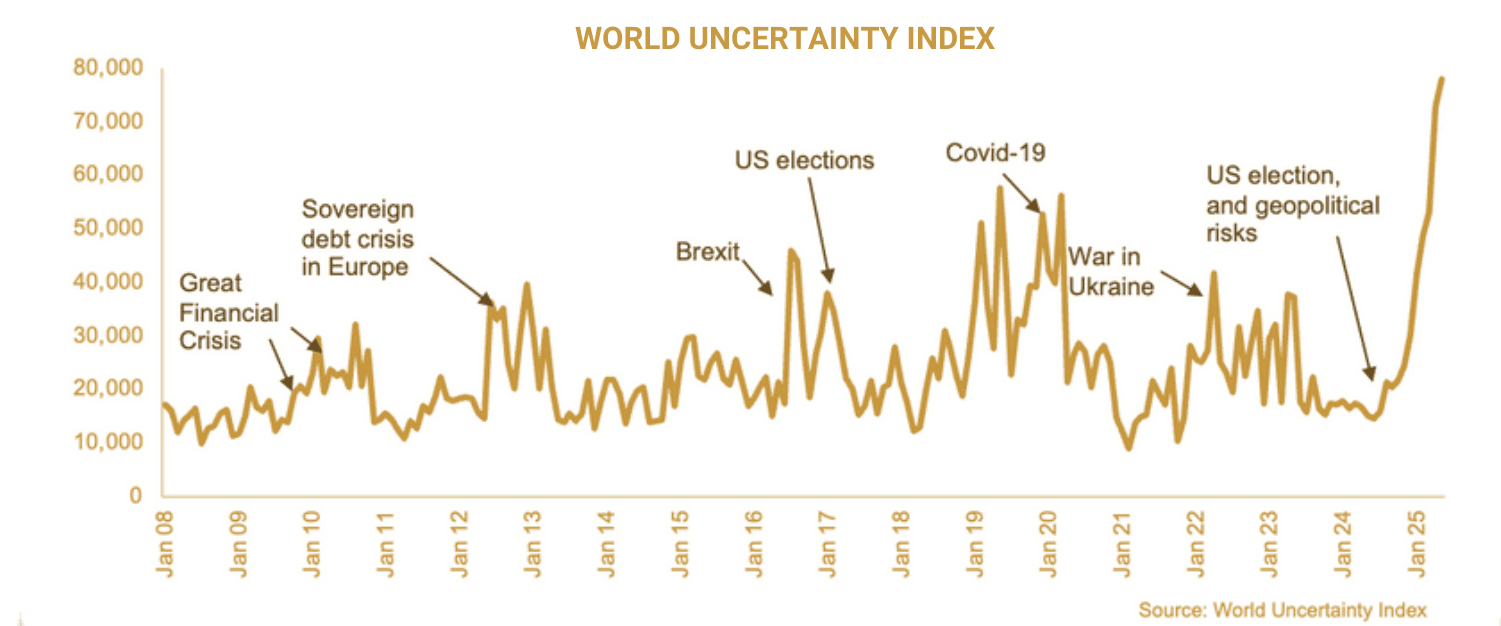
India, with its lower dependence on exports, is well-positioned to navigate this uncertain global landscape over the medium term. However, in the short term, rapidly shifting trade policies could disrupt supply chains, increase costs, and dampen growth. Also, the dollar’s current weakness is primarily against Euro, Pound, and Yen but could spread to EM currencies resulting in margin pressure for exporters.
We believe partially sitting out of the current rally carries limited risk to underperformance, but offers significant potential benefit if the rally fades.
Sucker’s Rally?
Globally, the narrow rally of the last two months is purely liquidity driven and might be lulling investors into a false sense of security. The “buy the dip / the Fed has your back” simulation, which has been self-fulfilling for the past 12 years, could very well be questioned in 2025.
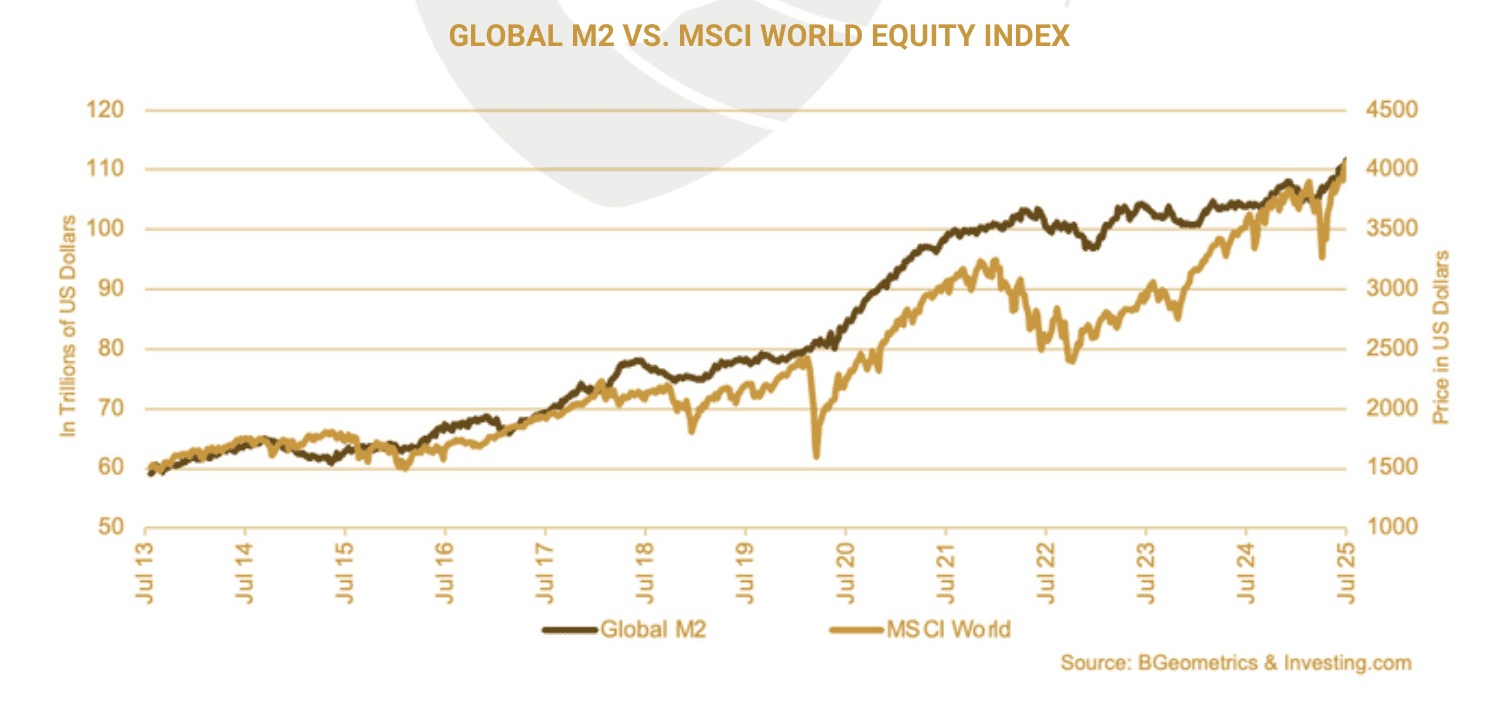
Market tops are generally dictated by the sins of the past rather than the expectations of the future, and they often unravel in the most unexpected places. While we don’t know what will give and when, we’ve made a decisive call to preserve capital and deploy it when opportunities become abundant again.
From Checkers to Chess: The Unravelling of the Global Order
The shift from a unipolar world with multilateral trade to a multipolar world with bilateral trade is akin to transitioning from playing checkers to chess. Since the Bretton Woods agreement in 1944, we’ve operated under a global, rule-based order that facilitated safe, efficient trade using a single dominant currency. This unipolarity and widespread multilateral agreements (GATT, WTO) fostered a focus on efficiency, specialization, and extended global supply chains. Companies built vast, interconnected networks optimized for cost and speed.
However, this world as we knew it is beginning to unravel. As national security takes precedence over pure economic efficiency in a more multipolar world, incentives are changing. Bilateral agreements, while easier to negotiate between two countries, create a patchwork of rules. Companies doing business across many nations may now face a unique set of tariffs, quotas, and regulations for each, significantly increasing administrative burden and complexity. We anticipate these supply chain disruptions will dampen global growth in 2025.
Everything that is Inflationary
While the Fed has been resolute about not cutting rates, it may be pulling back from its quantitative tightening stance as reflected in U.S. money in circulation (M2) which grew by 4.5% year-over-year in the March 2025 quarter. Globally too, the absolute stock of money supply remains significantly elevated. A rapid increase in M2 does help risk assets in the short term but translates into inflation eventually. The massive fiscal and monetary stimulus during the COVID-19 pandemic, which led to unprecedented M2 growth, contributed to the inflation spike seen in 2022 and has structurally pushed global interest rates higher.
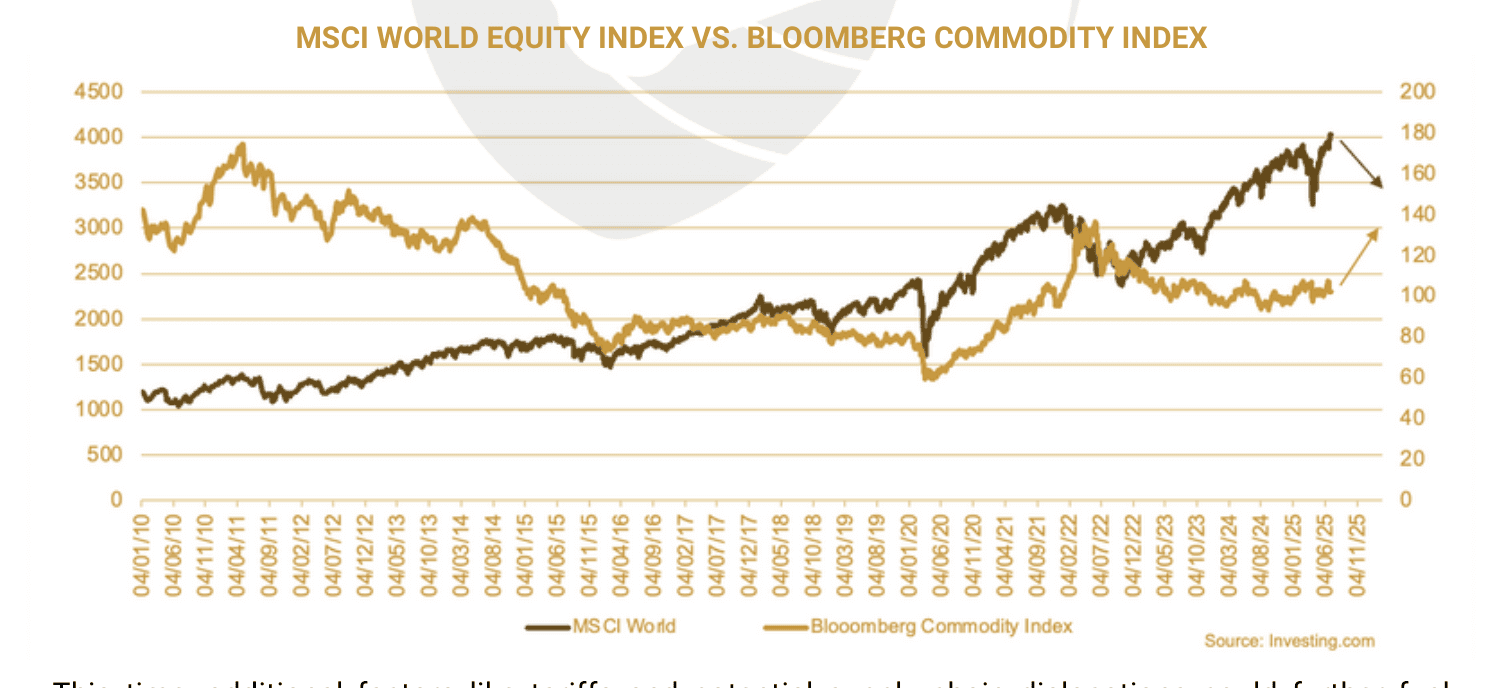
This time, additional factors like tariffs and potential supply chain dislocations could further fuel inflation. Furthermore, while global equity markets have largely kept pace with M2 growth, any cracks in equities could redirect liquidity to commodities, especially given the growing aversion to sovereign debt as an asset class. This could significantly drive-up commodity inflation. Unlike 2007–08, commodities have remained relatively untouched in the liquidity rally of the last four years and could very well be the last asset class chased by easy money.
Goliath vs. Goliath: Headwinds for the Largest Economies
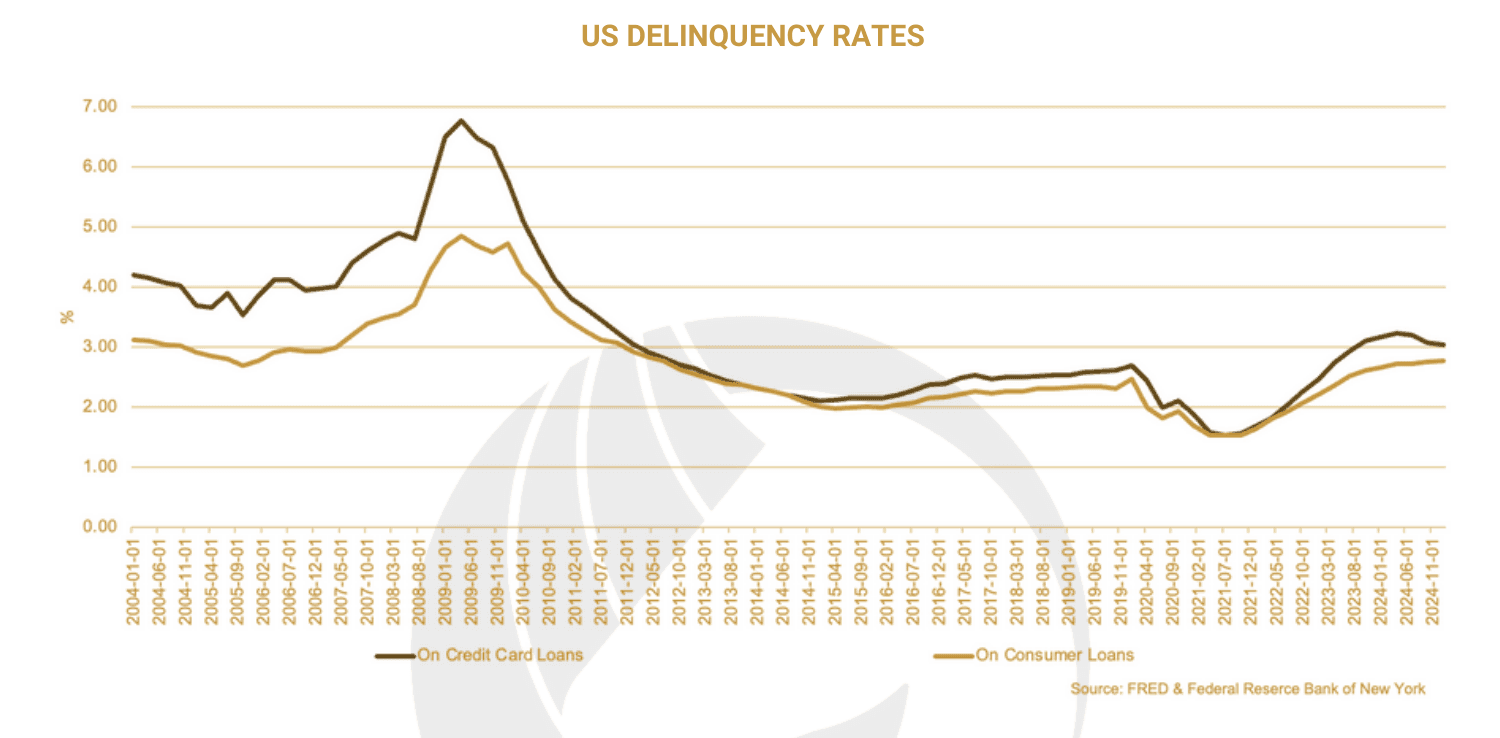
The world’s largest consumer (the U.S.) and largest producer (China) are facing significant domestic headwinds. In the U.S., a staggering $9 trillion of debt is set for repricing in 2025, and large budget deficits have added to the fiscal burden. Long-term interest rates remain stubbornly above 4%, and this repricing will push up an already high interest bill. While markets focus on treasury rollovers, cracks are developing elsewhere: commercial real estate, credit card loans, and even education loans are showing increasing stress. Not to mention tariff-driven inflation, a slowing economy and an incoherent political leadership.
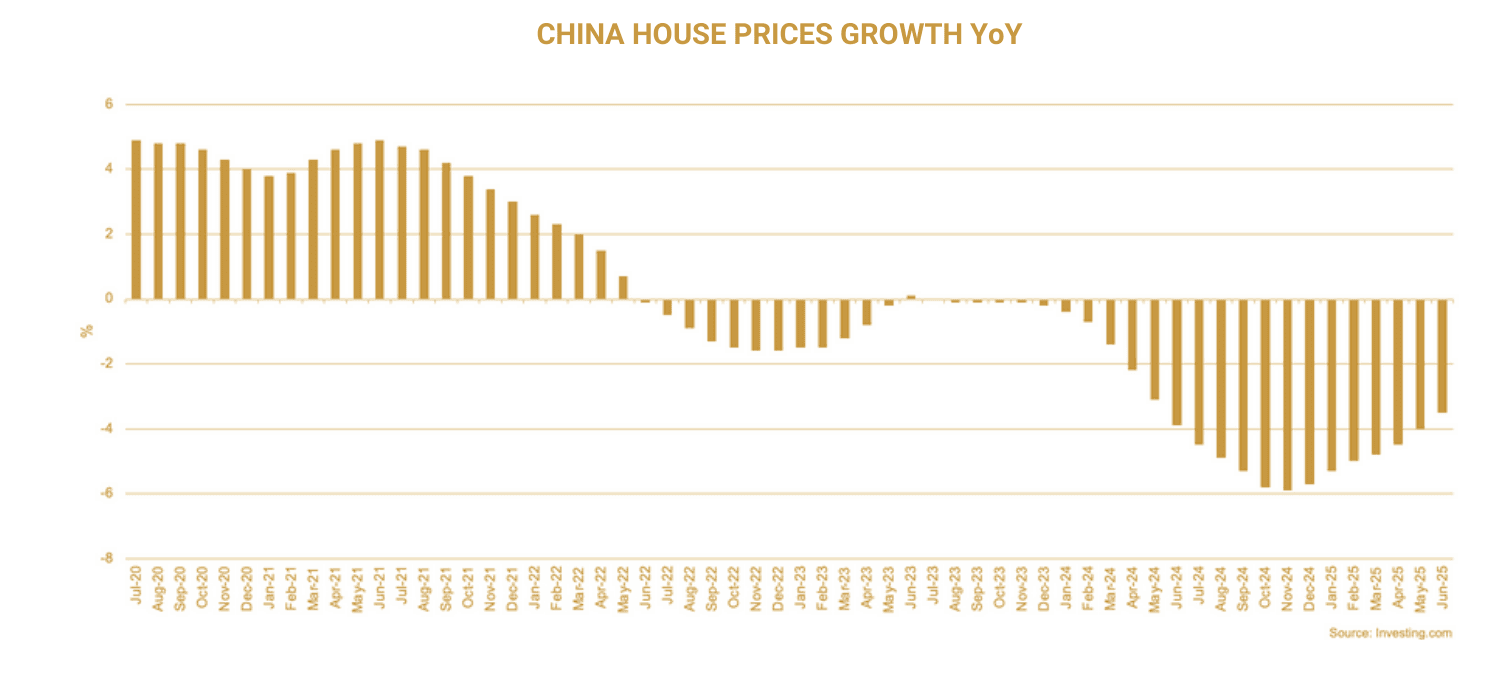
China, on the other hand, is battling a slowdown, tariffs, and significant wealth destruction in its middle class’s largest asset holding: real estate. China’s model of financial repression has left the middle class with limited avenues of wealth creation forcing them to prioritize saving at the detriment of spending resulting in deflation. The government’s liquidity boost, trade-in programs and subsidy on appliances have had limited impact on consumption so far.
The World More Prone to Conflict
The U.S.’s inability to sustain long conflicts, evidenced by its abrupt withdrawal from Yemen (Houthi engagement), withdrawal of support to Ukraine, and the urgency to announce peace after the strike on Iran’s nuclear facility, indicates a lack of willingness to engage in prolonged global policing. A world burdened by debt, a potential recession, and increasing social discontent, without a clear global police force, is a recipe for newer conflicts.
Historically, political leaders facing internal social or political unrest, economic hardship, or declining popularity have often initiated or escalated external conflicts to unite the populace, divert attention from domestic problems, and consolidate their power. While we don’t know when and where, regional conflicts are likely to increase over the coming year.
Doing nothing often leads to the best of something. We will wait our time.
Thank you for your continued trust and support.
Sincerely,
Team Pegasus