
Q4 FY26
Letter to Investors — April 2026
April 10, 2026

“Collapse does not arrive over a number of centuries but comes suddenly, like a thief in the night. A very small trigger can set off a ‘phase transition’ from a benign equilibrium to a crisis—the single grain of sand that causes the whole sand pile to collapse.”
Dear Investors,
For the first time in over two years, we believe the markets are offering a good opportunity to construct a resilient, long-term portfolio backed by structural tailwinds. Our mandate over the past year has been one of capital preservation.
In June 2025, we took the difficult but necessary step of insulating your capital from extreme valuation risks by exiting nearly all micro-cap holdings and maintaining a significant cash buffer for the better part of six months. Our decision to prioritize capital preservation last year was a double-edged sword. While it shielded us from the worst of the mid-cap erosion and provided the dry powder to build an enviable portfolio, it resulted in a higher tax outflow for the year. We remain firm in our philosophy – prioritize the preservation of the capital over tax optimization when structural risks are high.
Over the last four months, we have aggressively expanded our high-conviction ideas. For the first time, we have secured positions in formerly unaffordable businesses across the value chains of Electric Mobility, Nuclear Energy, Hydrogen Fuel, Semiconductor Chemicals, Defence, and Rare Earth Mining.
Q1 Review: The ‘Liberation Day’ Echo
The March 2026 quarter witnessed historic value destruction, surpassing even the “Liberation Day” drawdown of March 2025. While the Nifty 50 declined 14%, the broader market saw a staggering 17% erosion in value. Net selling by FPIs in March reached an all-time high of ₹1.14 trillion.
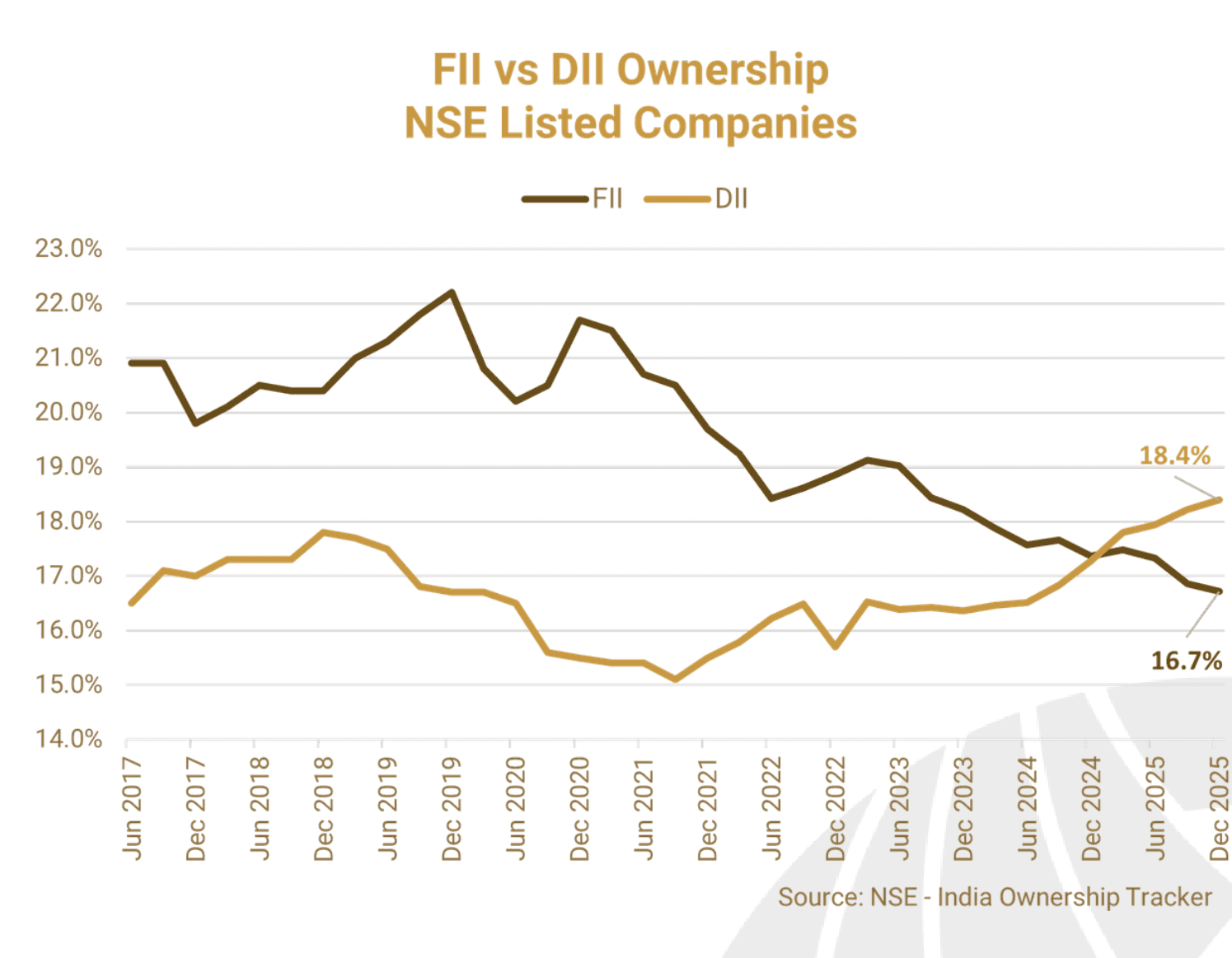
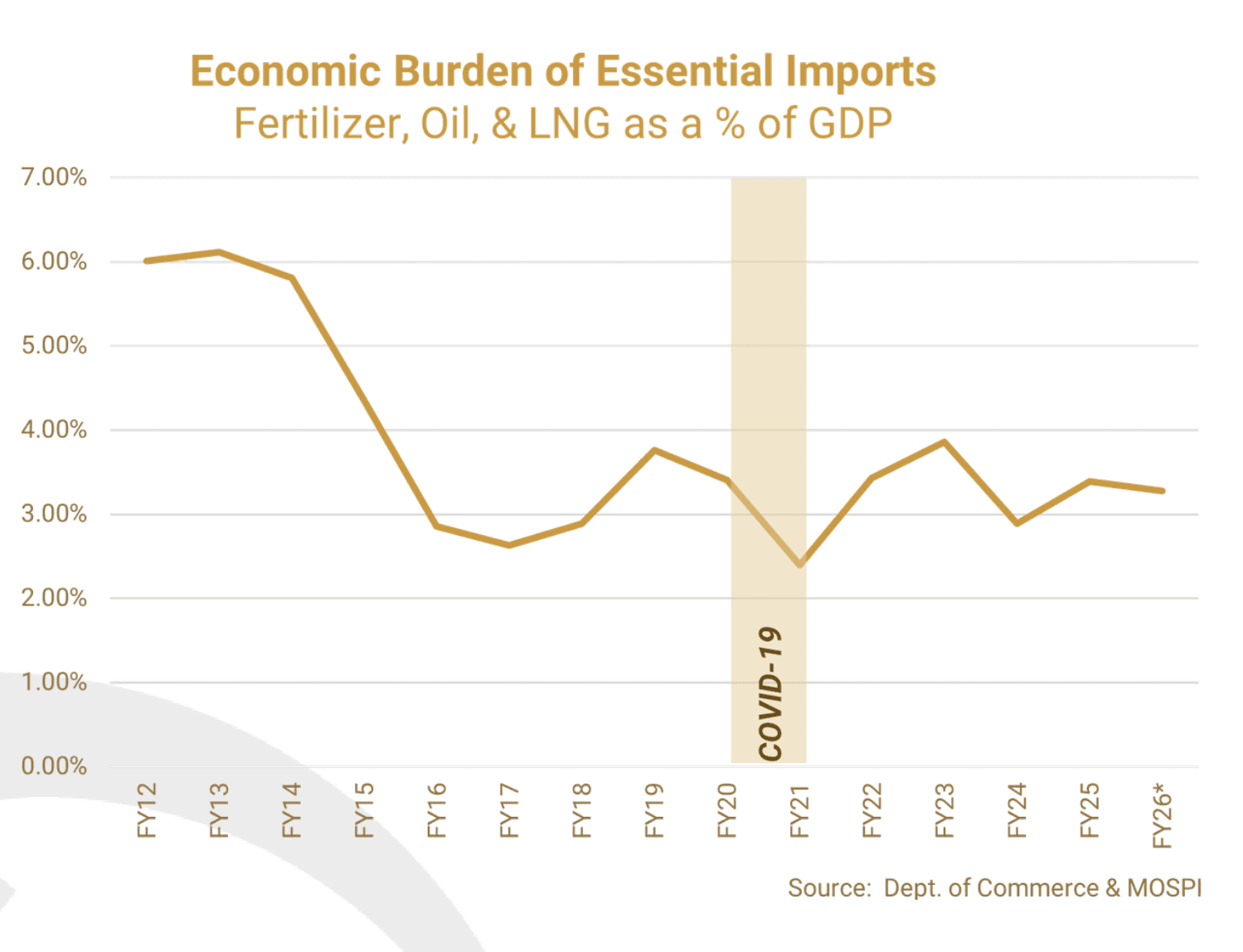
This volatility was compounded by global supply chain disruptions and an oil shock reminiscent of 1973. After assessing the medium-term geopolitical impact of the ensuing global conflicts and India’s relative positioning, we made the strategic decision to further increase our equity exposure following the onset of hostilities. We believe this deployment captures the market at its point of maximum pessimism.
The Geopolitical Threshold: A ‘Johnson Moment’
We believe the current U.S. administration is facing a ‘Lyndon B. Johnson moment’. Much like the Vietnam escalation that forced Johnson from the 1968 race, current foreign policy and the burgeoning “No Kings” movement are creating deep domestic friction. With ‘Gas at the Pump’ and ‘Charge at the Plug’ costs hurting consumers, approval ratings are at record lows ahead of the midterms. Externally, the current conflict has struggled to find unified support from NATO and GCC members.
Market participants should watch the US 10-year Treasury Yield as the ultimate arbiter of policy. History is repeating; on April 11, 2025, following the initial tariff announcements, the 10-year yield spiked above 4.5%, forcing immediate concessions from the White House. We anticipate that bond market volatility will continue to act as a circuit breaker for aggressive geopolitical maneuvering.
Furthermore, initial cracks are visible in the $2 trillion private credit market, with major funds beginning to gate investors—a clear signal of tightening liquidity.
The Structural Fallout of the Conflict
While the ultimate trajectory of the Middle Eastern conflict remains uncertain, its long-term structural consequences are already becoming clear. We anticipate a further fracturing of the global order, dismantling legacy alliances. A reactionary energy supply shock will compel nations to over-compensate in pursuit of strategic autonomy, triggering a massive capital cycle into Defence, Alternative Energy, and Semiconductors. We expect an acceleration of bilateral and free trade agreements as the world rebalances its dependence away from the U.S. for demand and China for supply. Finally, structurally higher inflation will persist as nations with already strained fiscal deficits prioritize the high cost of self-sufficiency over the efficiency of globalized trade.
India’s Manufacturing Renaissance: The Five Pillars
Our portfolio is now heavily biased toward domestic manufacturing. We believe efficient manufacturers with sustained moats and global scale will provide the best risk-adjusted returns over the coming years due to five converging factors.
First, China’s Anti-Involution policy: Beijing is mandating a ceasefire on price wars. For years, Chinese overcapacity led to “involution”—intense, inward-curling competition that forced firms to export deflation. As China now mandates capacity cuts and price floors to restore industrial profitability and wage rates, a strategic vacuum has opened for Indian manufacturers to compete on a level playing field.
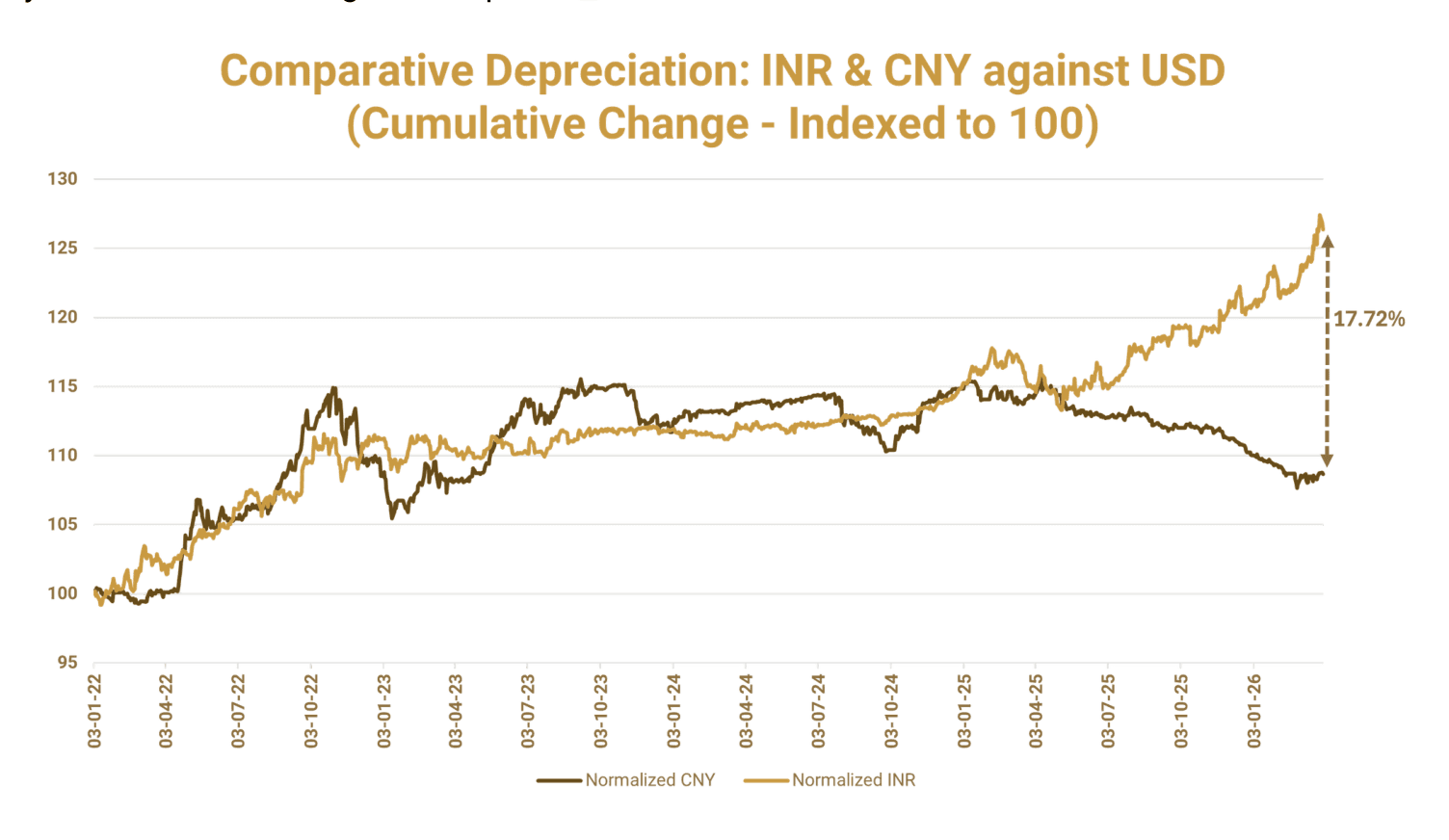
Second, Currency & Trade Tailwinds: The performance gap between the INR and CNY has reached a multi-year high, providing Indian exporters with a distinct competitive edge. This is bolstered by the operationalization of multiple Free Trade Agreements and the U.S-India Interim Trade Deal, which are significantly lowering entry barriers for Indian goods in premium markets.
Third, Reverse Brain Drain: Unlike the aging workforces of Europe and East Asia, India possesses a young, growing demographic. As AI automates traditional white-collar roles, top-tier Indian engineers are migrating from software services into Hardware, Semiconductors, and Industrial Automation.
Fourth, The Institutional Overhaul: India has initiated a sweeping series of structural reforms which have largely gone unnoticed but have fundamentally altered the calculus for FDI and corporate capex. GST 2.0 consolidates the legacy four-tier system into a streamlined three-slab structure. The dissolution of 29 archaic, colonial-era labor laws into four consolidated codes removes the primary bottleneck for labor-intensive manufacturing. The Income Tax Act of 2025 replaces the six-decade-old 1961 Act, aligning India’s direct tax system with global best practices.
Fifth, Global Trade Realignment: Driven by the imperative for supply chain diversification, multinational corporations and sovereign entities are aggressively seeking robust alternatives to legacy hubs. India is increasingly being seen as a destination for global manufacturing.
New Energy: Hydrogen & Small Modular Reactors
While solar and wind have dominated the headlines, we believe the next phase of India’s energy independence will be built on two pillars – Green Hydrogen and Small Modular Reactors (SMRs). These are not just clean alternatives; they are the critical solutions to India’s Intermittency Problem – providing stable, carbon-free power for industrial corridors and rapidly expanding data centres.
While India aims for 5 MMT of Green Hydrogen production by 2030, potentially reducing fossil fuel imports by over ₹1 lakh crore, the SHANTI Bill of 2026 has opened the doors to private sector participation in nuclear power. Unlike traditional, large-scale nuclear plants, SMRs are factory-built, modular, and inherently safer. India is now targeting the deployment of indigenously designed 220MW Bharat Small Reactors to provide 24/7 captive power for heavy industry.
Consistent with our philosophy of avoiding crowded trades and high-multiple energy producers, we are not investing in the capacity builders themselves. Instead, we are targeting the essential service providers and component manufacturers that constitute the critical infrastructure of this transition.
Green Hydrogen production is exceptionally water-intensive, requiring roughly 9 Liters of ultrapure water for every 1kg of hydrogen produced. We have taken targeted exposure to specialty chemical leaders that produce the advanced catalysts and filtration membranes essential for hydrogen fuel cells and next-generation battery storage. We are buying into these businesses at multiples that, in our view, price in almost no growth from the emerging opportunities, giving us a significant margin of safety as the National Green Hydrogen Mission and the SMR Private Participation program move from policy to execution in 2026.
Thank you for your continued trust and support.
Sincerely,
Team Pegasus